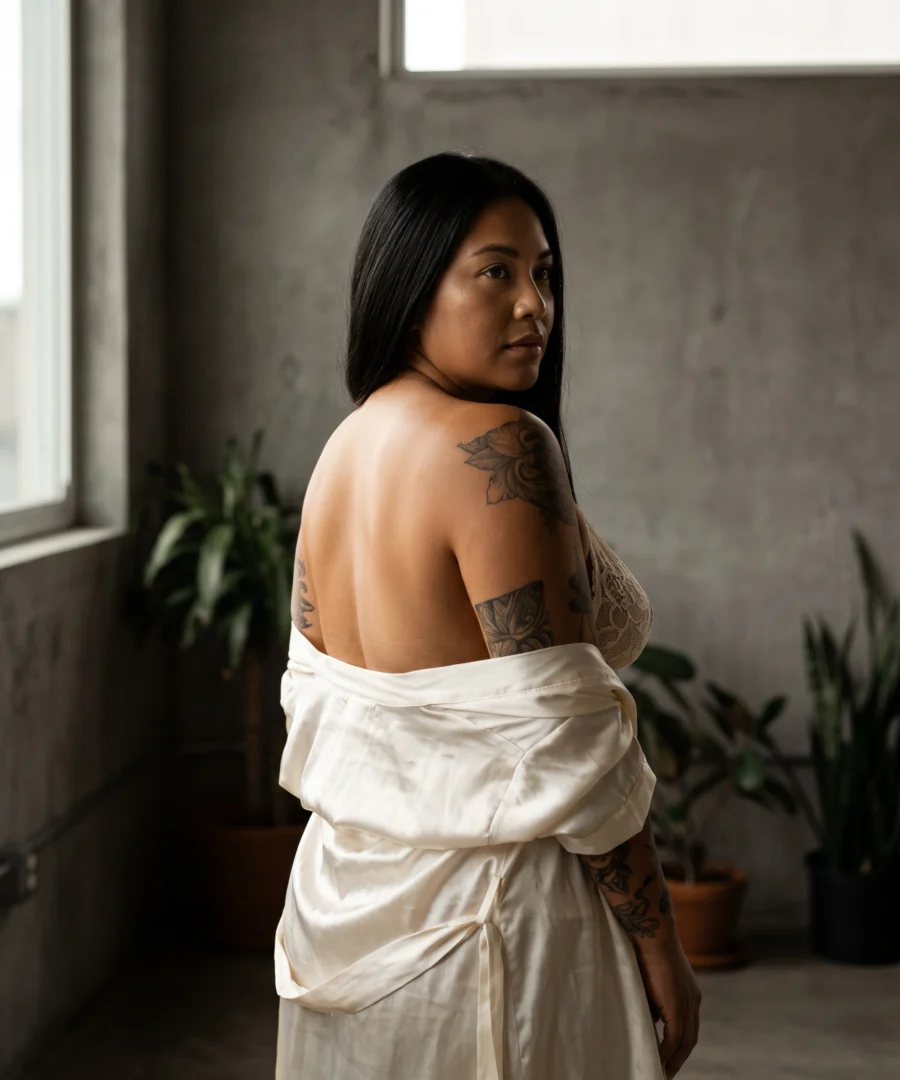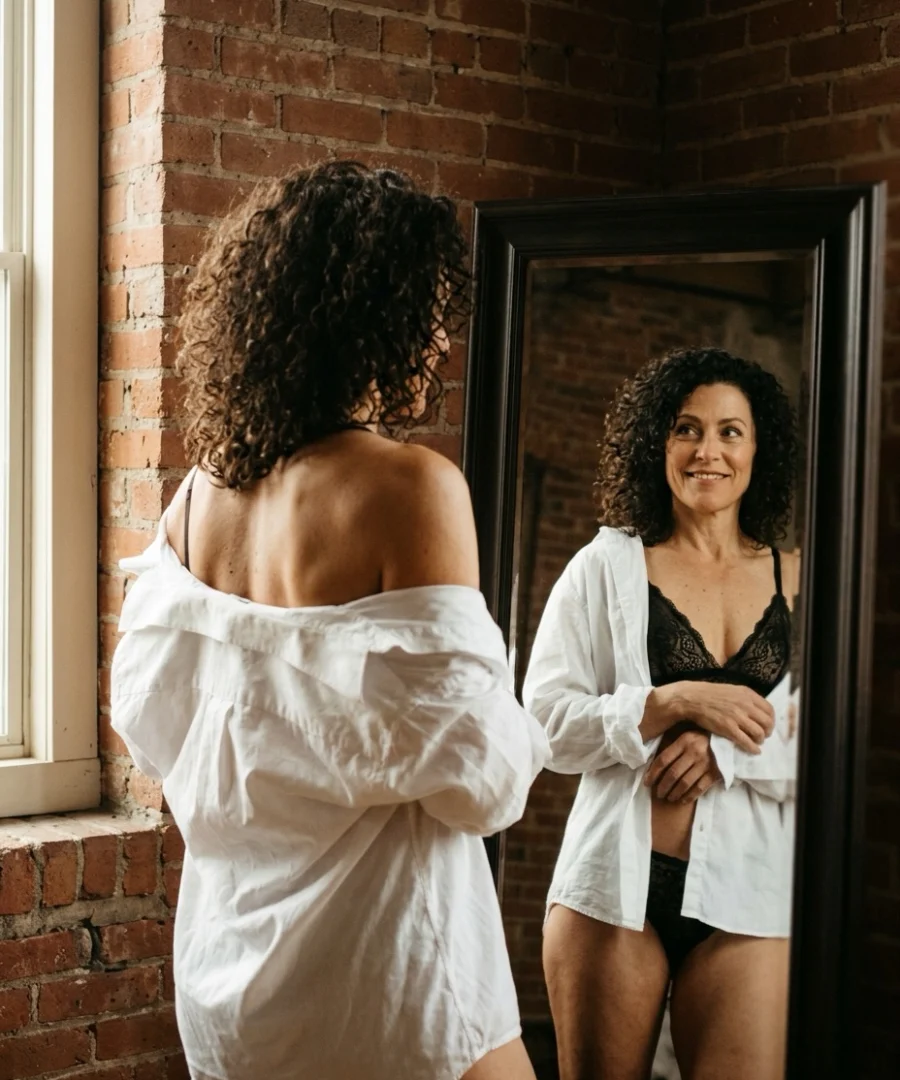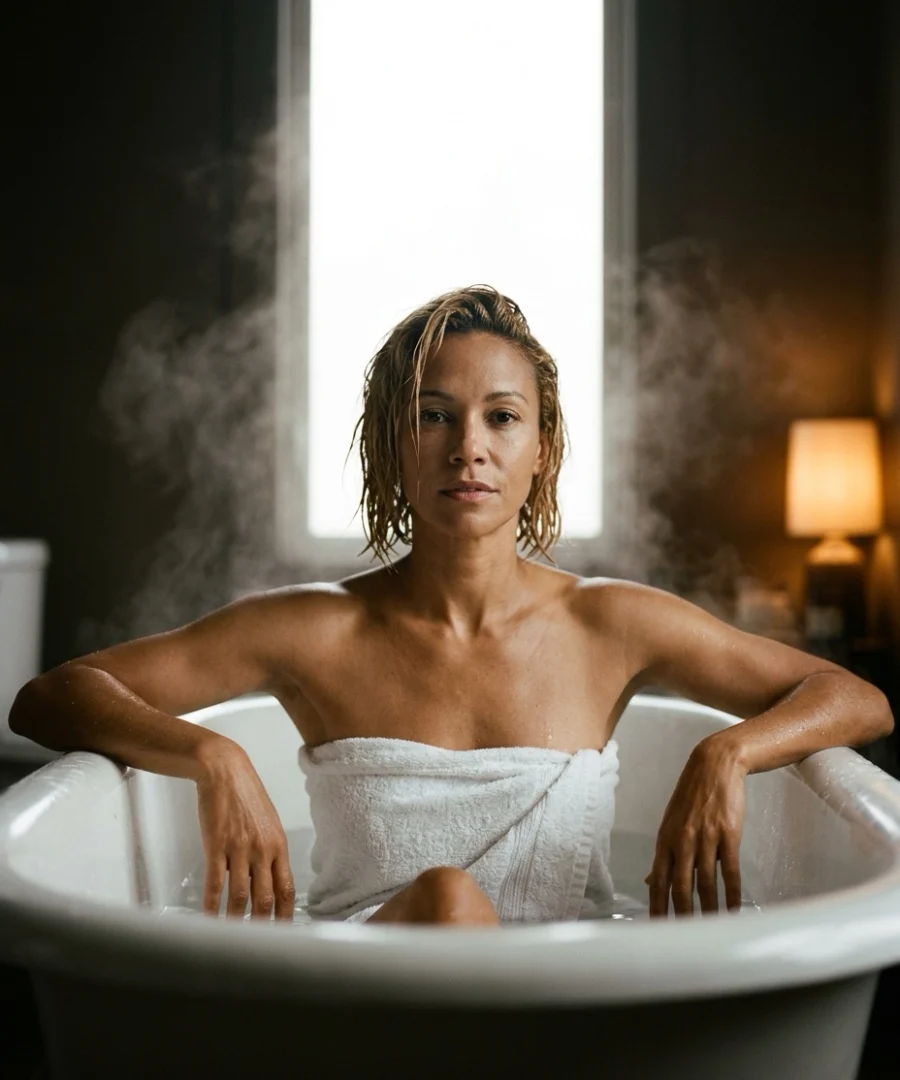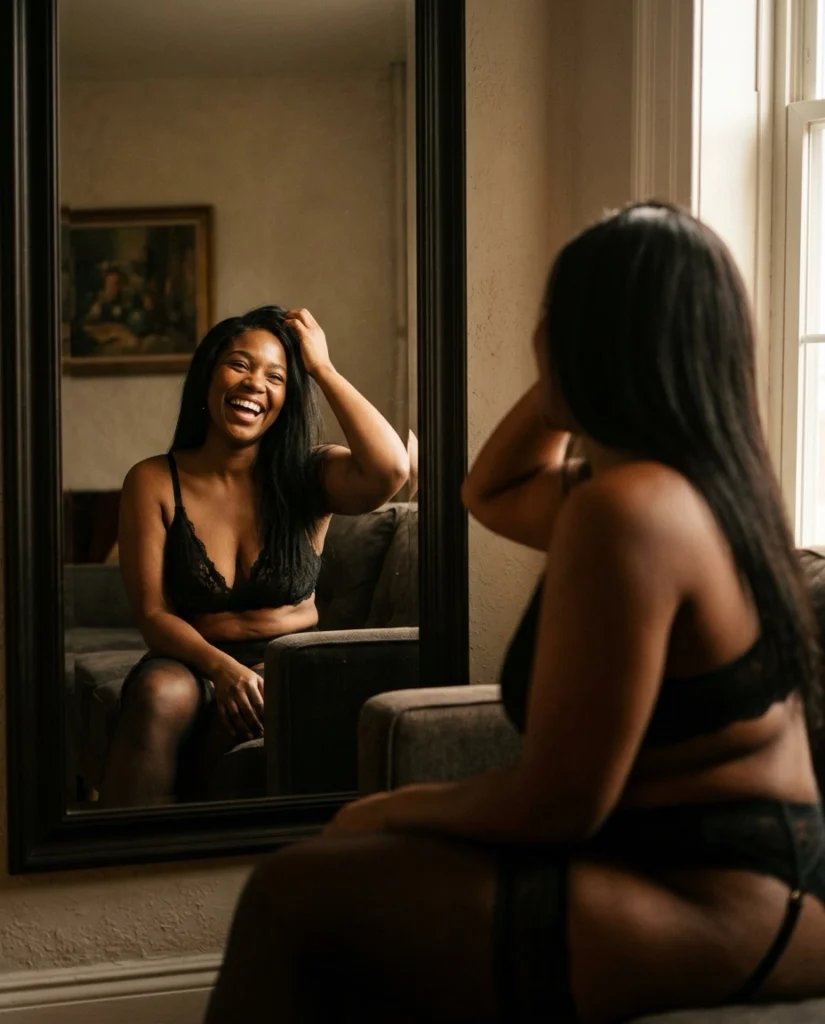
Good boudoir photo editing enhances what is already in the image and leaves the person’s distinctive features alone. Cull first, correct light and color, retouch lightly, then prepare delivery files. For deeper steps, see our technical guide to editing boudoir images.
What does boudoir retouching include?
Boudoir photo editing is the post-production work that brings out the color, detail and texture already in an image, and boudoir retouching is its close-up stage. That stage covers small repairs, texture control and guiding the eye. The person should still look like themselves at the end.
Boudoir is intimate, not merely explicit or provocative. The word comes from the French for a woman’s private room or dressing room, and the edit should keep that private feeling. It must also respect the person’s real body.
A retouching pass usually touches four things:
- Light: adjust it so the subject reads clearly.
- Color: enhance tones while keeping skin and fabric believable.
- Texture: smooth distractions without erasing skin.
- Focal point: draw the eye to what matters in the frame.
How to build a boudoir editing workflow
Learning how to edit boudoir photos starts with order, not tools. A fixed photo editing workflow keeps each gallery consistent and saves you from polishing images you later reject.
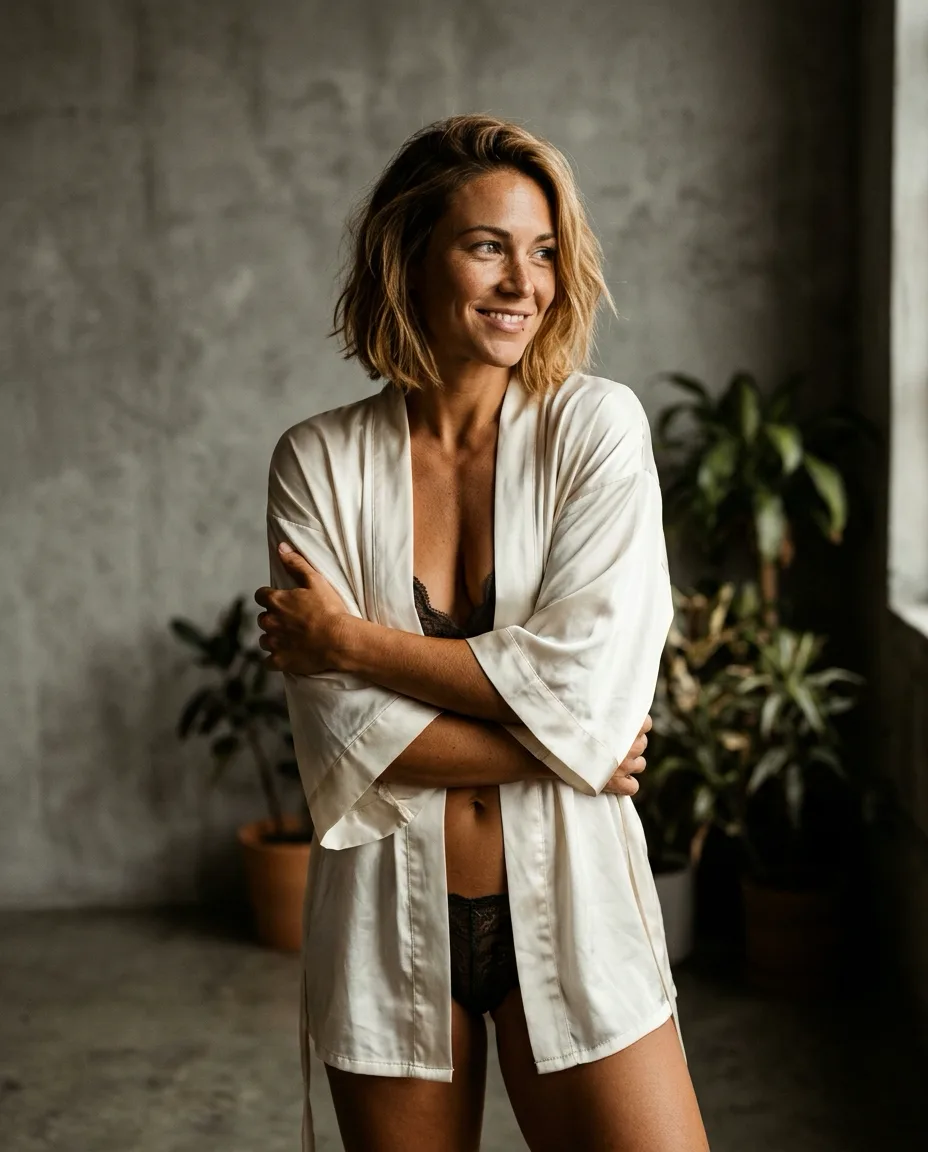
Cull and select the strongest images
Remove repeats, missed focus and closed eyes first. Then choose the images that reflect the client’s style and personality, not only your own favorites.
Correct light and color first
Set exposure and white balance before you touch any detail, because every later step depends on them. Keep lingerie color true to the real garment, and protect the soft feel of natural light instead of pushing contrast. Good lighting techniques for boudoir sessions also leave you less to correct.
Retouch details and guide the eye
Clear temporary distractions, then treat texture. Zoom out often, since lace detail can vanish under heavy smoothing. Finish with gentle light and contrast changes that lead the eye to the focal point.
Prepare files for delivery and albums
Export separate files for screen and print. For albums, pick a style that complements the images, with velvet or leather as options. Order the images so they tell the client’s story.
Natural skin retouching: how much is enough?
Enough is the point where distractions are gone and skin still looks like skin. Natural skin retouching keeps real texture visible, even at full size. Deciding how much to retouch boudoir photos is also a consent question, not only a technical one.
Professional boudoir photo editing celebrates what is already there. It does not distort the body or change distinctive features. We recommend checking each retouching choice against the rule below.
Less is more: enhance, do not alter.
Retouching decision rule
| Usually fix | Ask first | Leave alone |
|---|---|---|
| Stray hairs | Scars | Body shape |
| Lint on fabric | Stretch marks | Proportions |
| Passing marks | Tattoos and moles | Distinctive features |
The right column stays as it is unless the client asks and you agree the change stays true to them. If you cannot place an item, treat it as “Ask first”.
Which professional photo editing tools do you need?
You need two kinds of tool: one for whole-gallery work and one for close-up work. Professional editing tools adjust light, enhance colors, smooth textures and draw attention to the focal point. Choose them by function, not by name.
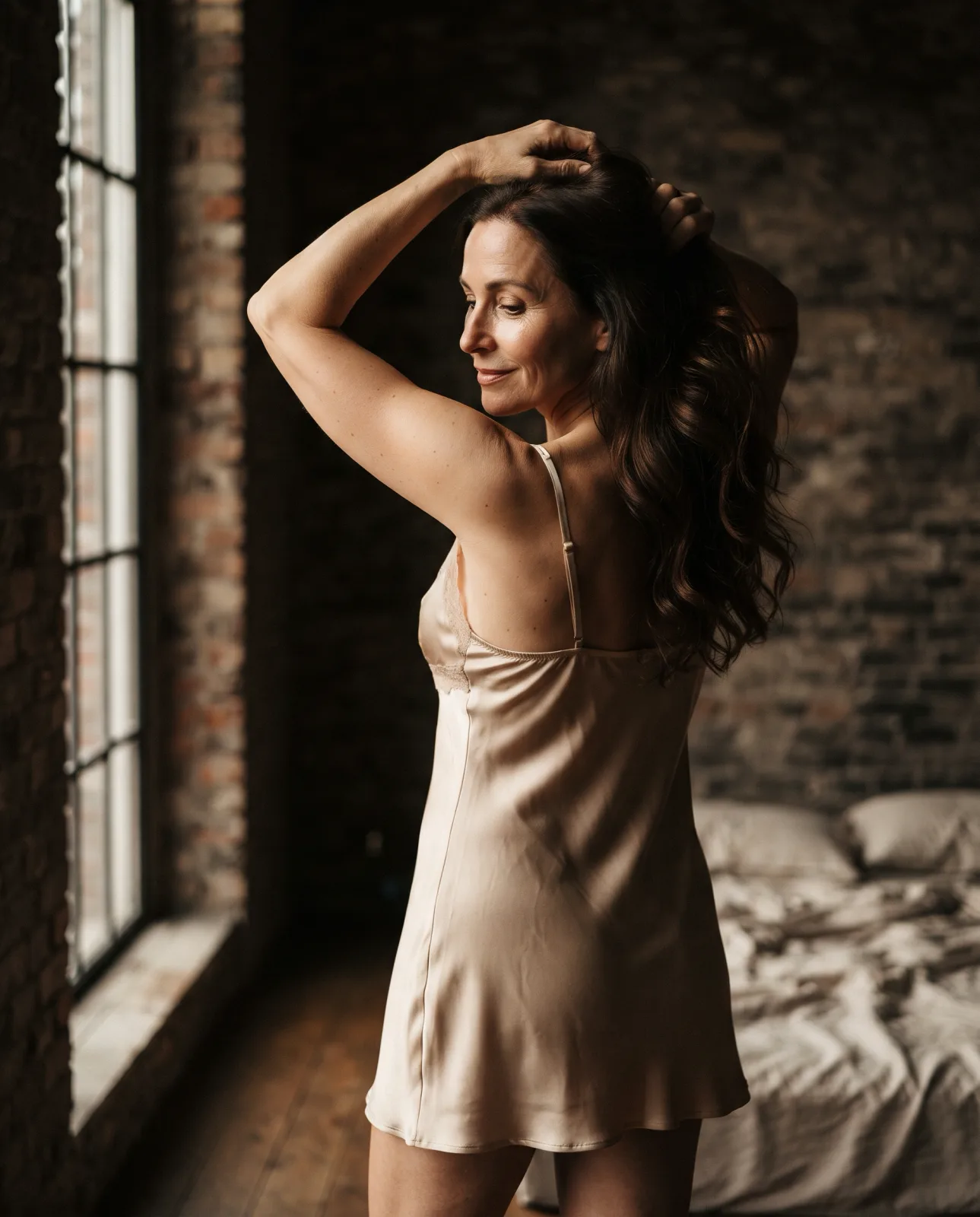
- Raw editor: culling, exposure, white balance and color across the gallery.
- Pixel-level editor: spot repairs, texture work and fine local changes.
AI tools are another option, but a person must still review every result.
When outside editing services make sense
Outside editing services can make sense when editing takes time you need for shooting or client work. Send a written brief with your retouching rule and some reference edits. Get the client’s consent first, and include the cost when you work out how much to charge for boudoir photography.
How to agree on the edit and protect client privacy
Boudoir photographers can prevent many editing problems with a short talk. Held before the editing process begins, it gives the photographer, the editor and the client the same target.
Agree on the look before you edit
Ask these questions and write down the answers:
- What do you like and dislike in photos of yourself?
- Is there anything you want left exactly as it is?
- Are there marks you would like softened or removed?
- Can you share images whose look you love?
Keep communication open through delivery. If a separate editor works on the gallery, pass these notes along so the edit matches what the client agreed to.
Set clear rules for image use
Privacy is foundational in boudoir photography. Reach a clear understanding, in writing, about who sees the files, where they are stored and whether any image may be shared. Many studios have strict privacy policies, and clients should be able to read yours before the shoot.
A small rule
No boudoir photo leaves your hands without consent. That covers your portfolio, your social channels and any outside editor.
Boudoir photo editing: frequently asked questions
How much should you retouch boudoir photos?
Retouch until distractions are gone and the person still looks like themselves. Fix temporary items such as stray hairs and lint. Ask before you touch scars, stretch marks, tattoos or moles. Leave body shape and distinctive features alone unless the client asks.
What is the best order for an editing workflow?
Cull first, then correct light and color, then retouch details, then prepare files for delivery and albums. This order saves work because you only retouch the images you plan to keep. Detail decisions also hold up better once light and color are already right.
Should clients know how their photos will be edited?
Yes, tell clients how you edit before the shoot and again before you start retouching. Ask about their likes and dislikes and what they want left untouched. Clear answers give you and any outside editor a shared target and help avoid changes they did not want.
Can you outsource boudoir photo retouching?
Yes, if the client knows and agrees. Give the outside editor a written brief with your retouching limits, reference images and the client’s notes. Review every file yourself before delivery, because the client trusted you with private images and the final result is still yours to answer for.