Disclosure: some links in this article are affiliate links. If you buy through them, we may earn a small commission at no extra cost to you.
At-home boudoir photography takes a private room, soft window light and a camera or phone on a tripod with a self-timer. Plan a simple theme, practice poses in a mirror and edit lightly. For the basics of the style, read about getting started with intimate portraits.
What is a DIY boudoir photoshoot at home?
At-home boudoir photography is tasteful, intimate portraiture that you plan and shoot yourself in your own space. The word boudoir is French and once meant a woman’s private sitting room or dressing chamber. This style of portrait is open to any age, size or background.
You might choose a home boudoir shoot for one of these reasons:
- To feel good in your body, just for you
- To mark a milestone, such as a round birthday or a fresh start after a divorce
- To give a partner a gift
Feeling nervous the first time is normal. You are the only one in the room, so you can stop, laugh, delete and try again.
How to take boudoir photos at home: plan first
Start with your reason, because it shapes the style and mood of your boudoir photos. A gift for a partner may call for a different feel than a set made only for you.
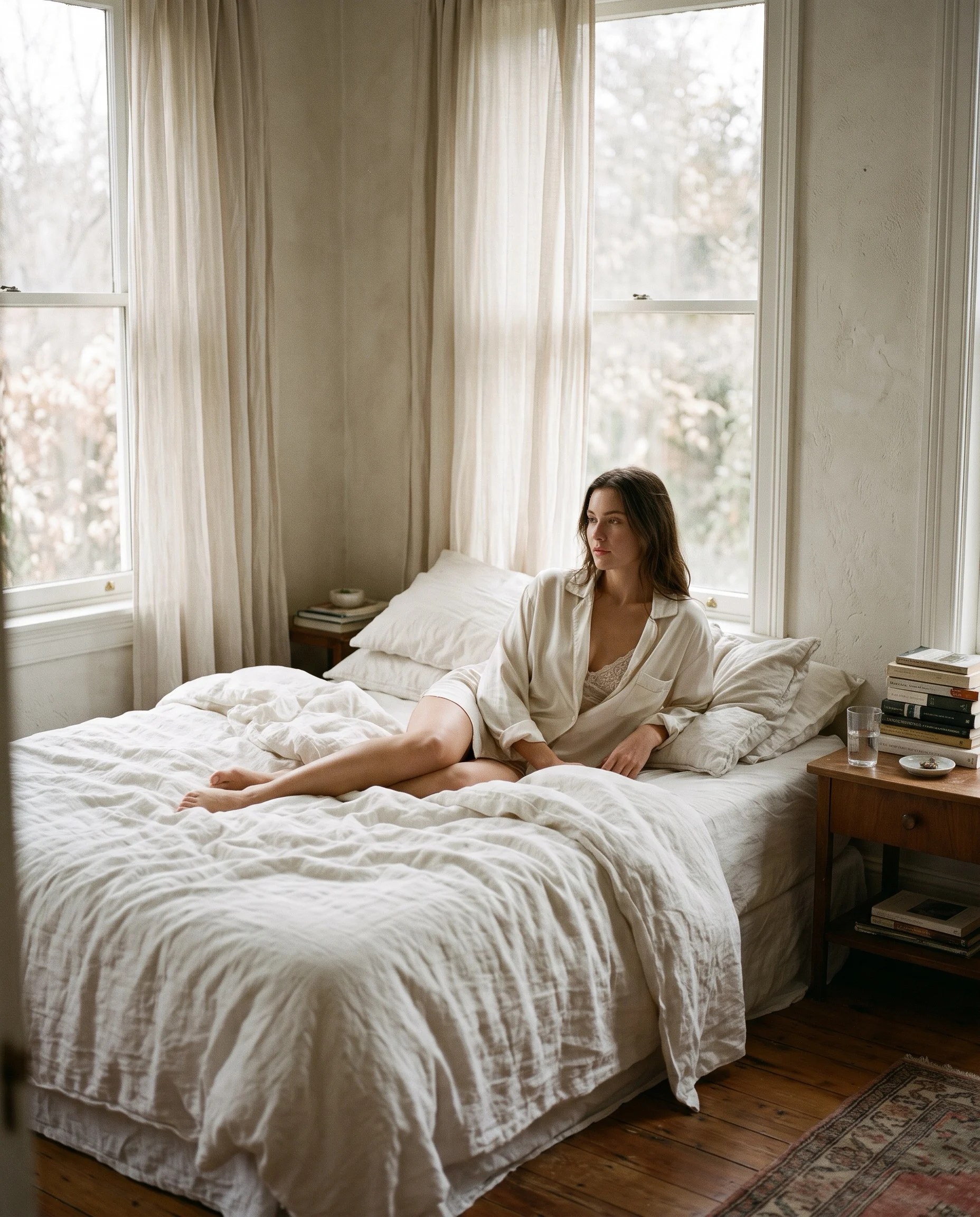
Next, pick a theme. Boudoir can be sweet and coy, bold and edgy, vintage pin-up or modern and minimal. Save a few images you like and note what they share.
Get ready in a way that feels like you. Groom to your own standards, not anyone else’s. Your body does not need to change for this shoot.
Before an at-home boudoir session, run through this checklist:
- Your goal and theme are chosen.
- You have private time, or others at home know about the session.
- Clutter is out of the frame.
- You have tested the soft light where you plan to shoot.
- The tripod and self-timer are ready.
- Outfits and meaningful props are laid out.
- Your pose list is close at hand.
Where to shoot and how to light the room
A private, clutter-free space
Look for good natural light, little clutter and a spot that feels private and calm. A made bed, a chair by the window or a clean wall is enough.
Soft light from windows and lamps
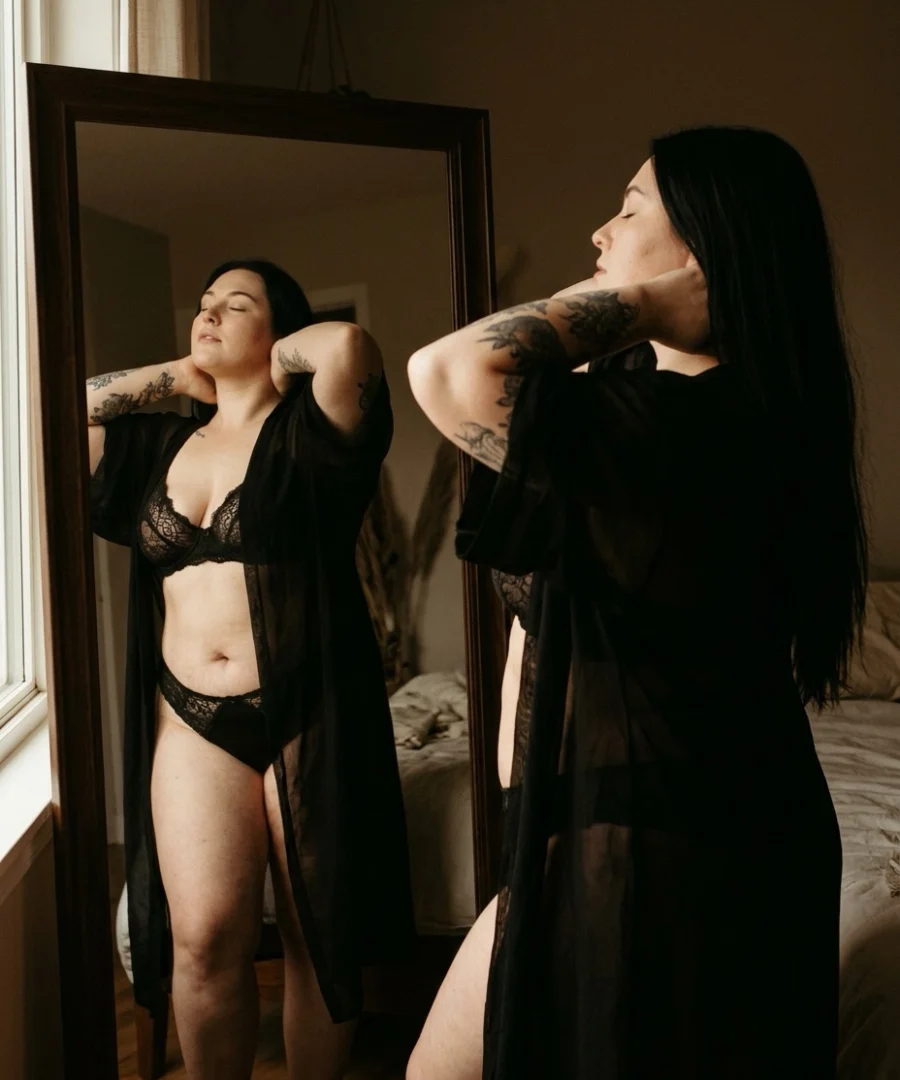
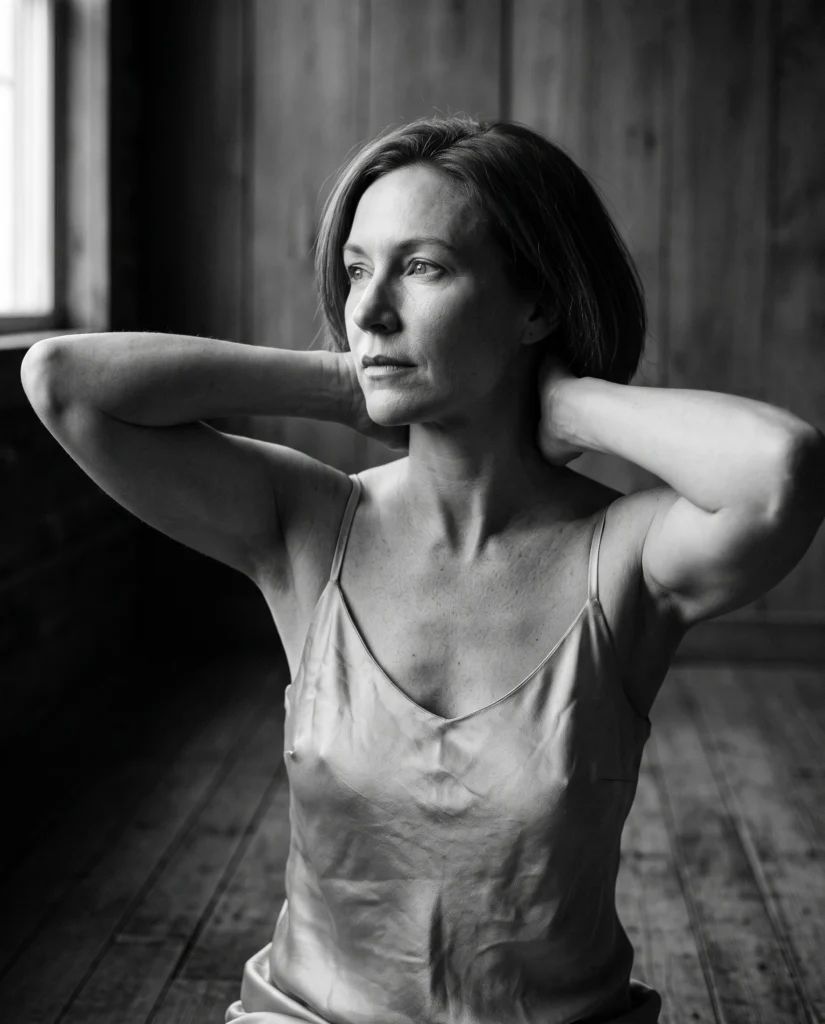
Soft, diffused light gives a flattering glow and shapes curves gently. Face a window with sheer curtains, then turn slowly and watch how the shadows change on your skin.
As the day fades, try dimmable lamps. Candles add warmth, but keep them in sight and put them out before you leave the room. Add a few objects that suit your style.
What gear do you need for self boudoir photos?
You need a phone or camera, a sturdy tripod and a self-timer. Start with your phone, which works well for selfie boudoir shots, and let the timer free your hands for posing.
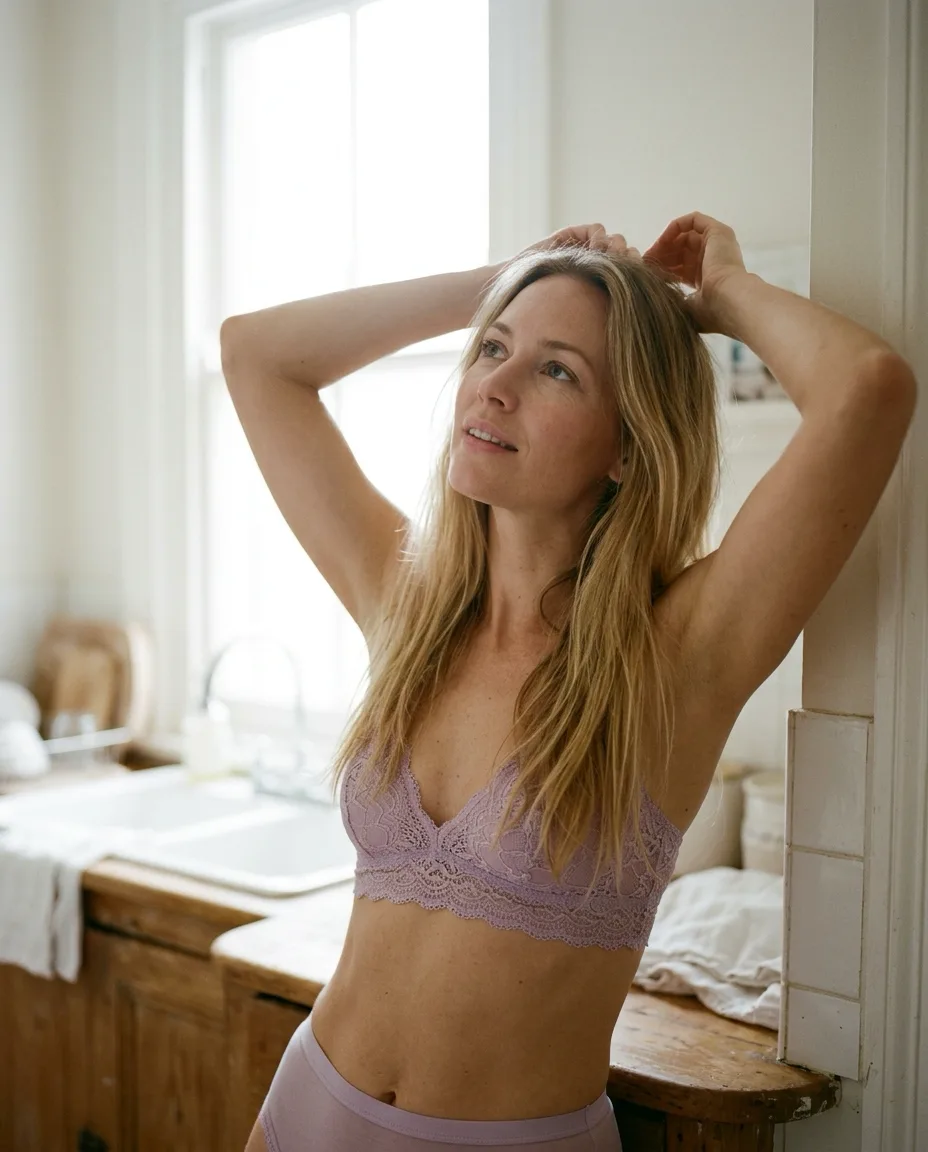
To upgrade later, add a DSLR or mirrorless camera with a 50mm or 85mm prime lens. Store intimate photos somewhere private, and turn off any automatic sharing you do not want.
Extra tools are optional: a reflector for shadows, a lamp after dark, or a softbox or ring light.
Camera settings for sharp, soft portraits
Use these camera settings for boudoir photos as a starting point:
- ISO: keep it low for less noise.
- Aperture: open it wide for shallow depth of field and a soft background.
- Shutter speed: keep it fast enough to avoid blur.
- Focus: set it on your eyes or a chosen detail, such as jewelry.
Last, keep the background clean: move anything behind you that pulls the eye.
Poses, outfits and edits for a home shoot
Take one boudoir photo at a time and give yourself room to experiment.
Boudoir poses at home to practice
Look up poses for your body type, try them in a mirror and keep a short list of favorites near the camera. These are easy first tries:
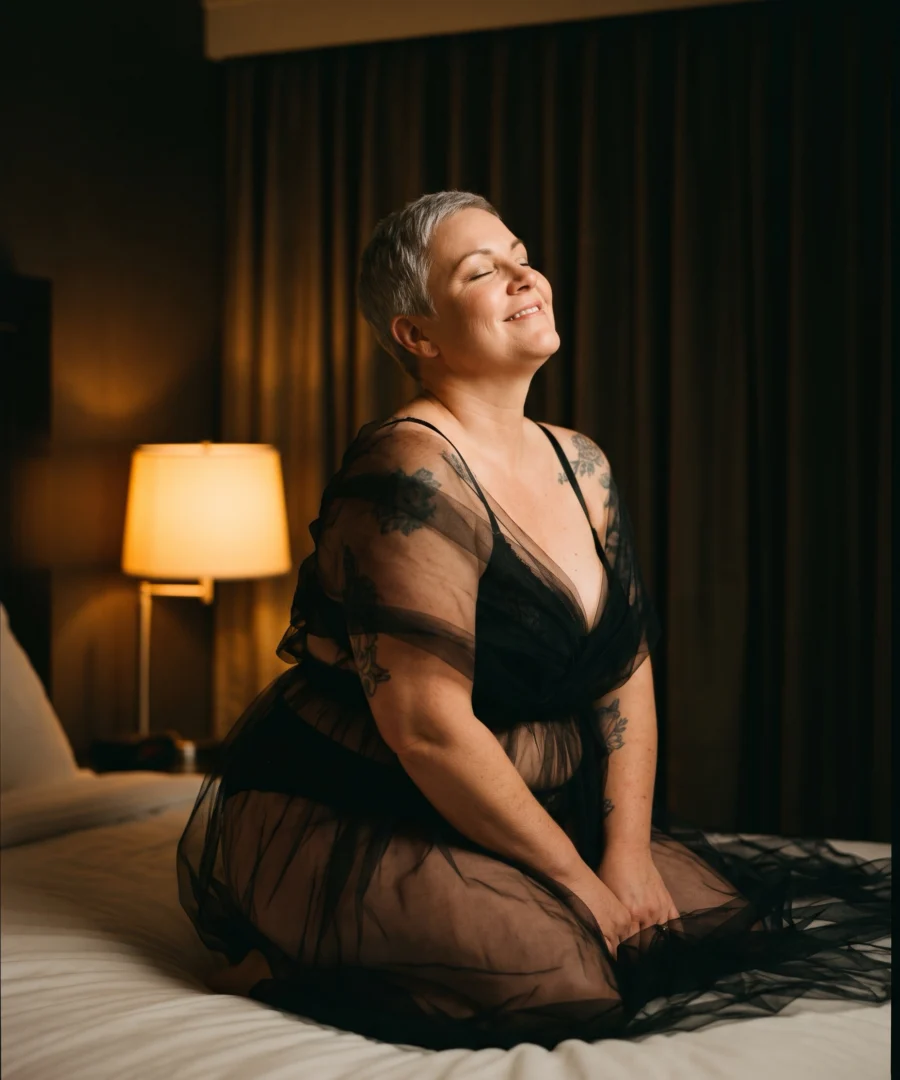
- Sit on the edge of the bed with one shoulder turned to the camera.
- Lie on your side with your head resting on your hand.
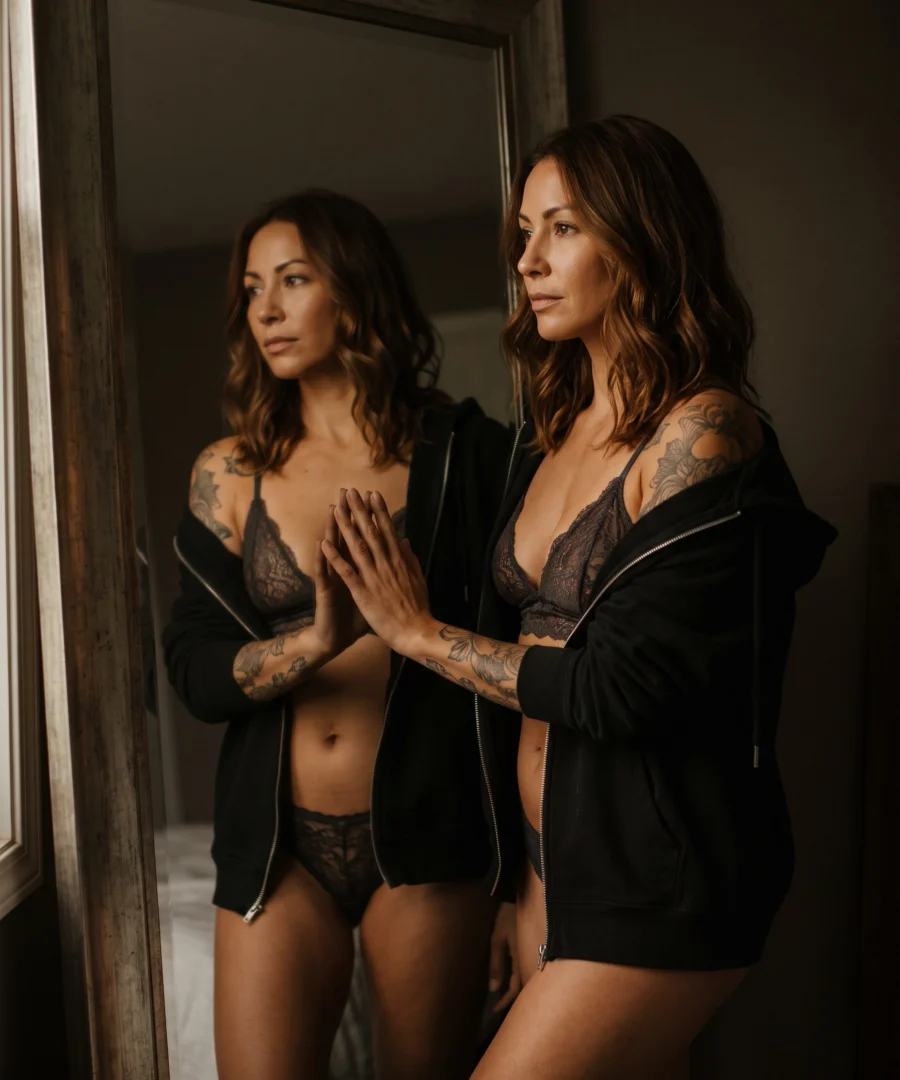
- Stand by the window and look out.
- Wrap a robe around you and look back over your shoulder.
Move slowly and let your hands rest softly.
Outfits and props for your shoot
Wear what feels good: lingerie, a robe or a favorite T-shirt. Comfort makes for more relaxed photos. Plan a few looks and lay them out in order so changes stay smooth. For more ideas, see what to wear for intimate portraits.
Props work best when they mean something to you, such as jewelry, a cherished book or a musical instrument.
Editing with a light hand
Adjust the light and color first, then smooth skin just a little. We recommend stopping while the photo still looks like you.
DIY boudoir or a professional photographer?
Go with DIY boudoir photography if privacy and control matter most, and hire a professional if you want someone to guide you. The table shows where each one helps.
| What matters | DIY at home | With a professional |
|---|---|---|
| Posing | Mirror practice and your own list | Pose coaching and direction |
| Light and camera | You learn and set them up | They handle the light and camera |
| Control | You set the pace and the edits | You agree on it together |
| Privacy | Your photos stay with you if auto-sharing is off | Rests on the photographer’s discretion |
A simple rule: if having someone else in the room is what holds you back, start at home. If the technical side would keep you from enjoying the day, or you would love to be guided, hire a pro.
When you compare photographers, look for a portfolio that matches your style, expect discretion and speak openly about what you want. This guide explains how to prepare for a first session with a photographer.
At-home boudoir photography: frequently asked questions
Can I do a boudoir photoshoot at home by myself?
Yes, you can do a boudoir photoshoot at home by yourself with a tripod and a self-timer. Choose a private time, test the light near a window and keep a short list of poses close by. You can delete anything you do not like.
Can I take DIY boudoir photos with a phone?
Yes, a phone on a tripod can take good self boudoir photos when the light is soft. Set it near a window with sheer curtains and use a timer so your hands stay free. A DSLR or mirrorless camera gives more background blur, but a phone is an easy start.
What is the best light for home boudoir photos?
Soft, diffused daylight from a window is the best place to start for home boudoir photos. Sheer curtains soften the light and give skin a flattering glow. After dark, use dimmable lamps, and add a reflector if shadows look too deep. Test the light before you change.