Disclosure: some links in this article are affiliate links. If you buy through them, we may earn a small commission at no extra cost to you.
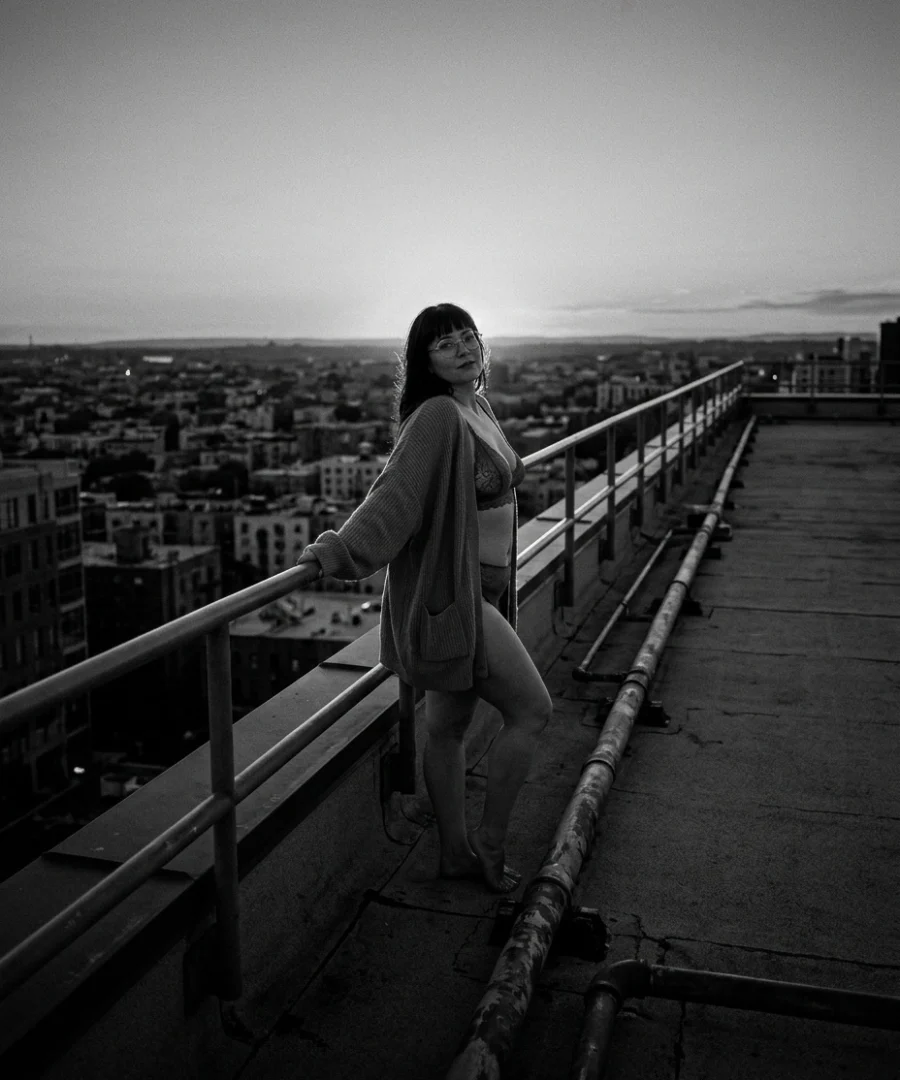
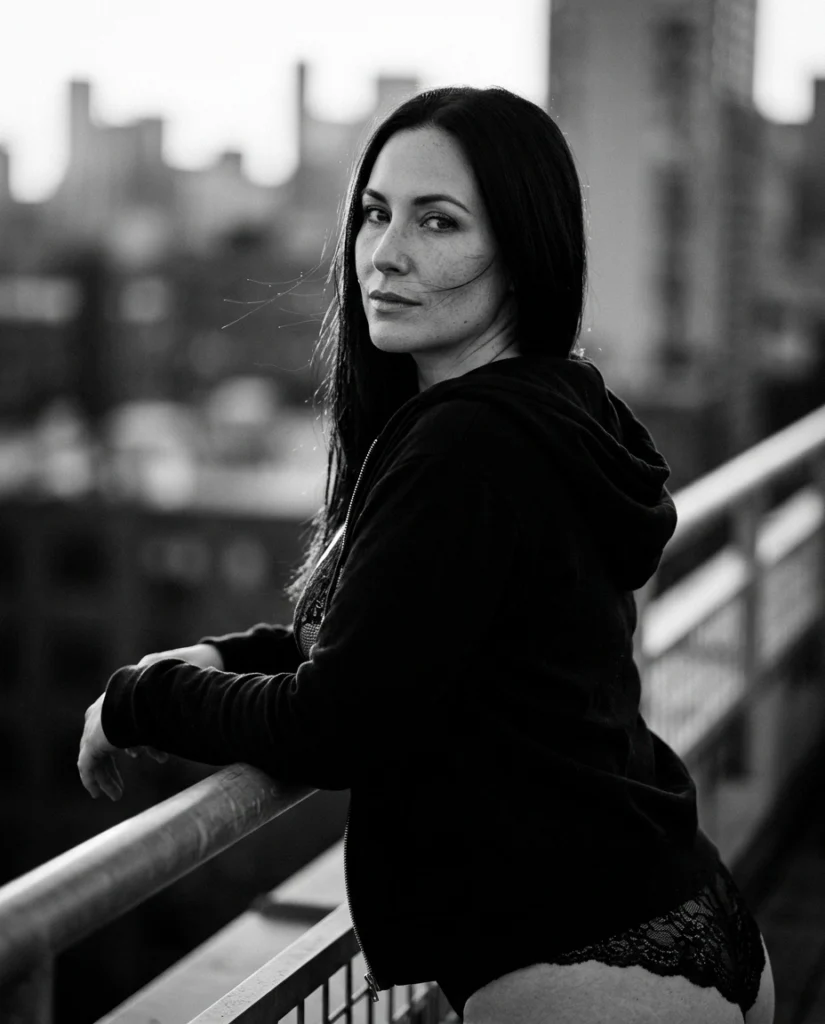
Rooftop boudoir photos are intimate portraits with a city or open sky behind you. Like urban boudoir photography, they set soft, personal images against hard architecture. Book a shoot only after you confirm the space is private and safe, with a plan for wind.
What is a rooftop boudoir photoshoot?
Rooftop boudoir photography is the art of taking intimate, sensual images on top of a building, with a city or open horizon as the backdrop. Its appeal lies in the views and the feeling of seclusion inside a busy city. Hard architecture next to soft intimacy creates the contrast.
An outdoor boudoir session gives up some control for that view. Here is how a rooftop compares with a boudoir studio.
| Factor | Rooftop | Boudoir studio |
|---|---|---|
| Privacy | Needs closed access, screens, and careful positioning | Indoors, behind closed doors |
| Light | Natural light that shifts through the day | Set up indoors, so less tied to the hour |
| Weather | Wind and sudden changes need a plan | Not a concern indoors |
| Noise | City sounds; music and direction help | Easier to keep quiet |
If open air does not feel right for you, a luxury hotel session is another setting to consider.
How do you choose a private rooftop location?
Choose a private rooftop location for a boudoir shoot that stays closed to the public for the whole session. That can mean a rented private space or a venue with secluded rooftop access. Rooftop bars are one type of venue to ask about, but only if the roof can be closed off.
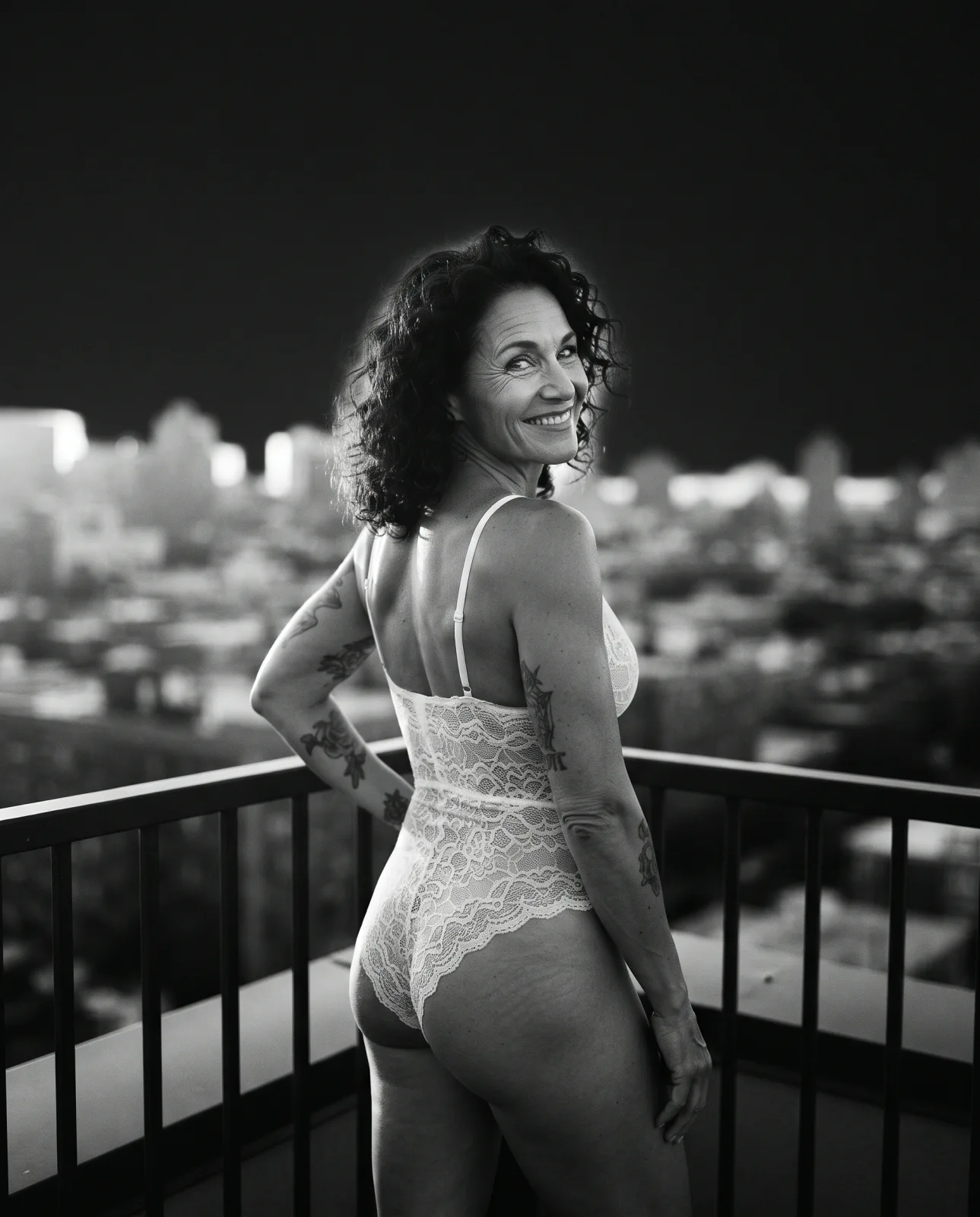
Ask who checked the structure for safety and whether local rules require a permit. Rules differ by place, so confirm them for your location.
Talk about exposure before the shoot day. Screens, positioning, and set design can create boundaries, and you stay in control of how much you show.
Potted plants, a chaise lounge, plush rugs, and flowing fabrics can soften the space, but furniture must stand up to the weather.
Rooftop check before you book
We recommend asking to see past rooftop work, then going through these questions.
- Is the rooftop closed to the public during the shoot?
- Has the site been checked for safety, and are any permits in place?
- Can screens or positioning block outside views?
- Have you agreed on your exposure limits?
- Is there a private place to change, a seat, and refreshments?
- Is there a plan for wind or sudden weather?
- Does the session time suit the light you want?
A no to either of the first two is a reason to keep looking.
What to wear for a rooftop photoshoot
Pick colors and styles that stand out against the skyline. Try them on and move around, so you can pose freely.
- Bold lingerie that shows up clearly
- Flowing robes that catch the wind
- Elegant jewelry or a scarf as a finishing detail
- Colors that suit the sunset, if you plan to shoot at that hour
If your shoot is tied to a wedding, these bridal boudoir ideas may help you narrow things down.
Poses and golden hour light on a rooftop
You do not need to know how to pose. Ask your photographer for gentle guidance toward angles you like.
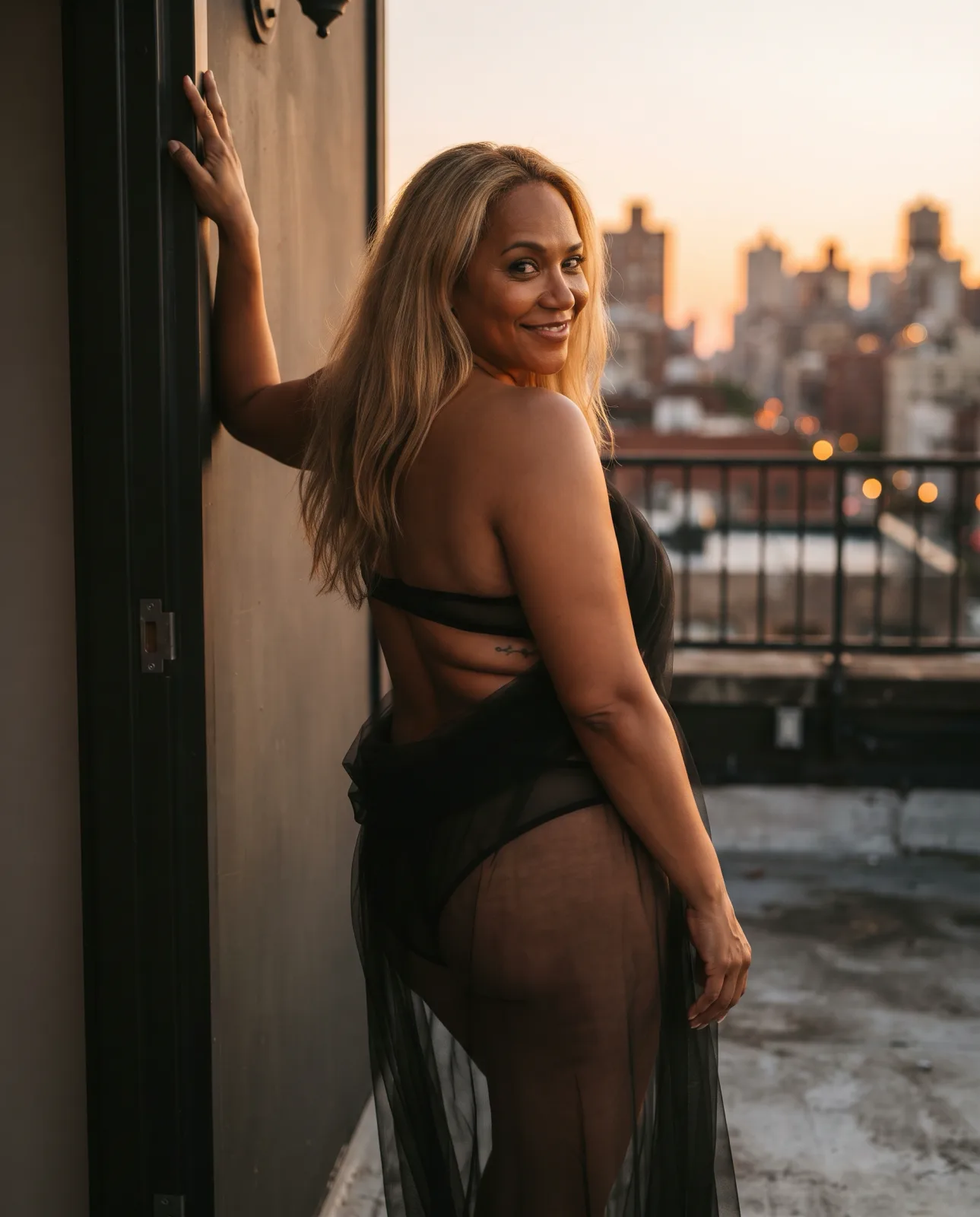
Rooftop poses that use the height
Try these poses in the open space around you:
- Lean back and look up at the sky.
- Stretch upward and let your body lengthen.
- Let the wind move your hair and any loose fabric.
A small rule
You set the limits. If a pose, an outfit, or a spot near the edge feels wrong, say so and move on.
Timing golden hour boudoir photos
Book early morning or late afternoon for soft, flattering light. Golden hour adds a warm glow.
Rooftop photoshoot: frequently asked questions
Can people see me during a rooftop shoot?
They should not if the space is set up well, but no rooftop is private by default. Nearby buildings may have a view, so ask about them directly. Exclusive access keeps the public out, while screens and careful positioning can block outside views. Agree on your exposure limits beforehand.
What time of day is best for rooftop photos?
Early morning or late afternoon is usually best, because the light is soft and flattering. Golden hour adds a warm glow that suits skin and gives the photos a romantic mood. Ask your photographer to check the light at your location, then choose a time that fits your look.
What happens if it is windy or the weather changes?
A good shoot has a backup plan, so agree on one before the day. Rooftop weather can change quickly. Light wind can add movement to fabric and hair, while stronger wind or rain may mean a pause or a new date. Ask whether the photographer has weighted light stands and weather-sealed gear.