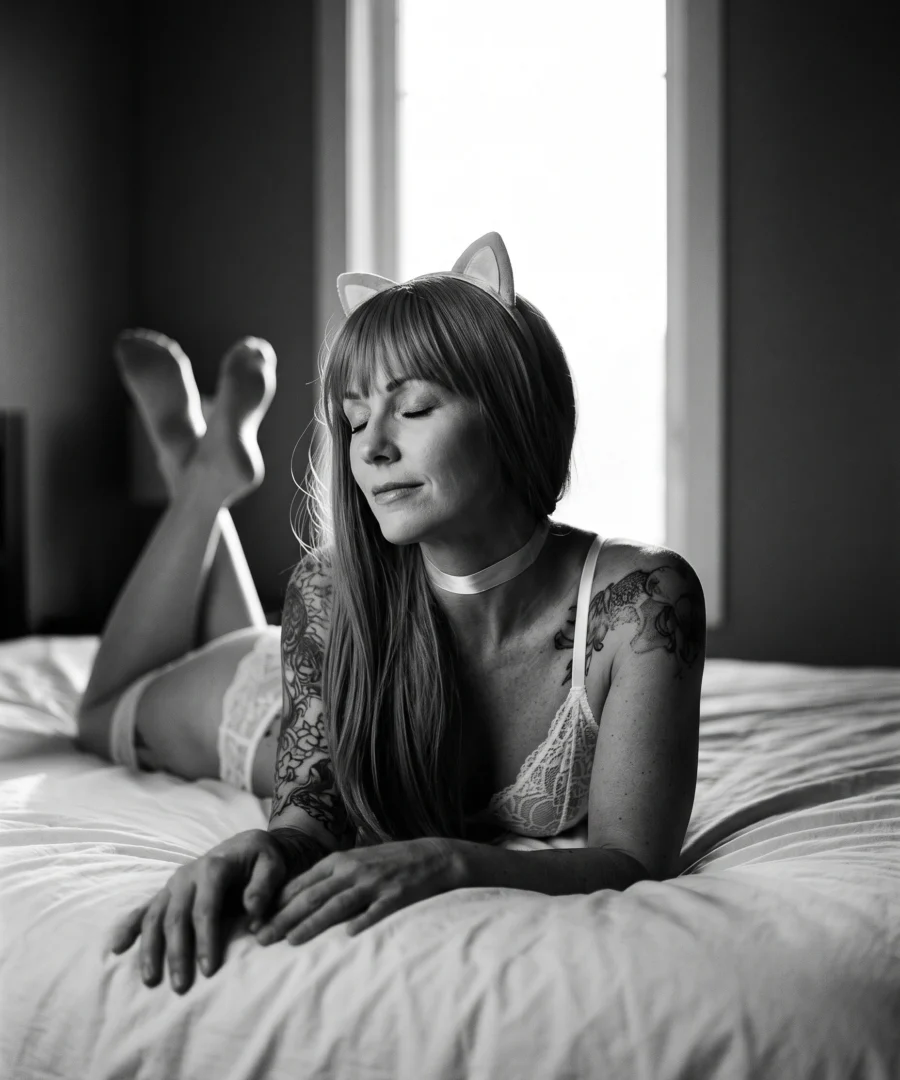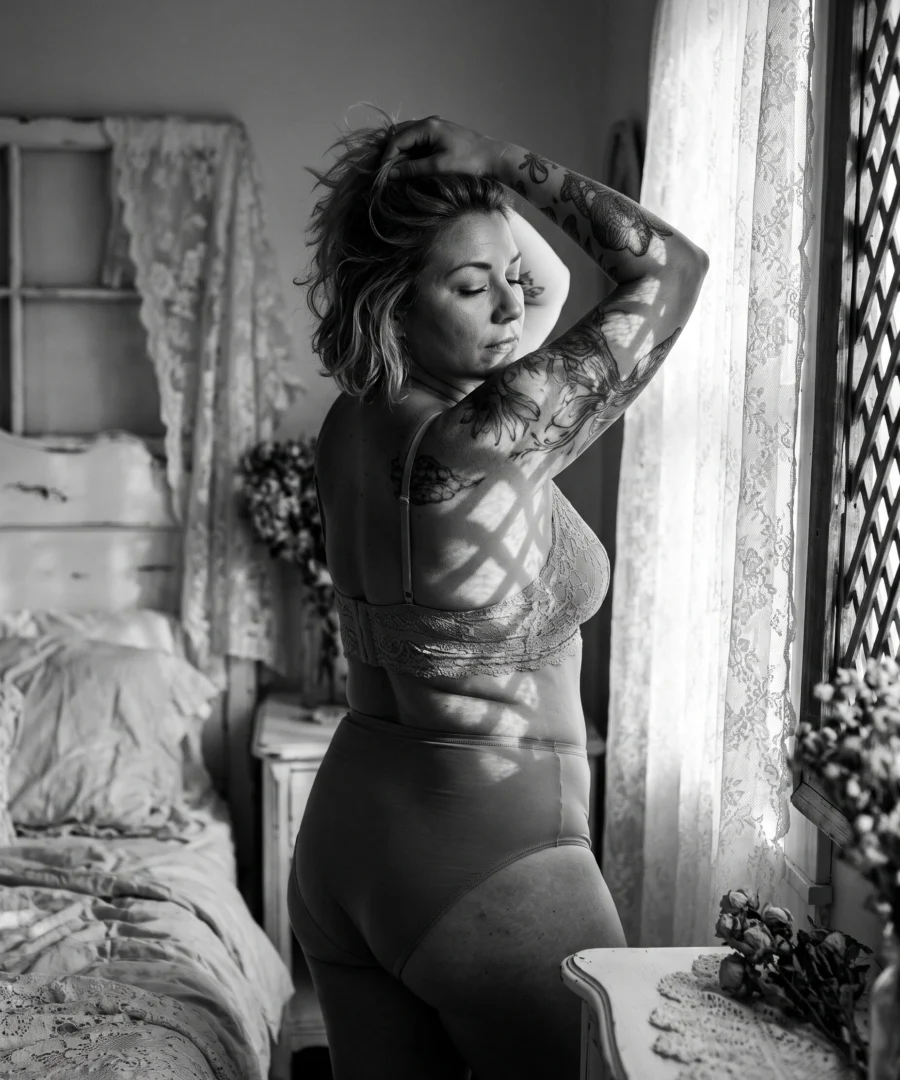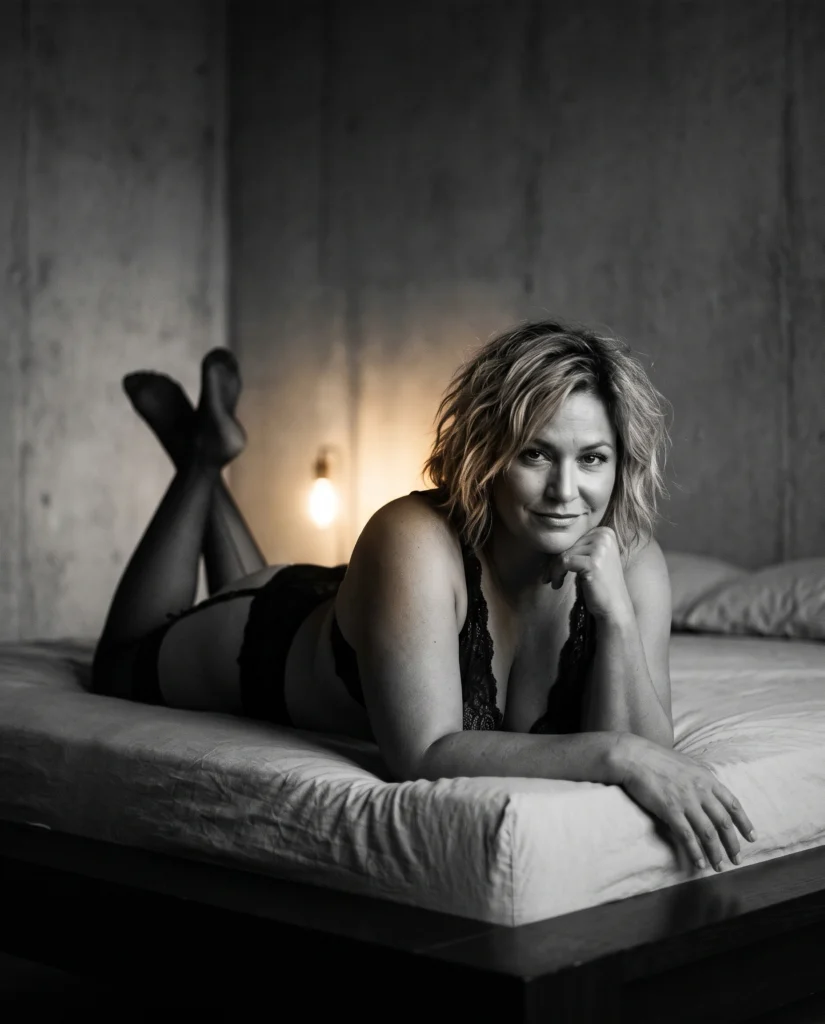
The best moody boudoir photography tips come down to shaped light, a quiet room, textured wardrobe and natural poses. Feeling safe matters just as much, because your ease shows in the images. For a softer take, see these sensual boudoir photography tips.
What is moody boudoir photography?
Moody boudoir photography is an aesthetic built on atmosphere, emotion, introspection and vulnerability, telling a story through shadow and light. It puts a real feeling ahead of a perfect pose, so the photos tend to feel personal and easy to relate to. The result can sit close to fine art photography.
You do not need to be a model, or any certain size or age, to suit this style.
Moody vs traditional boudoir
The main difference is what each style of boudoir photography puts first.
| Feature | Traditional | Moody |
|---|---|---|
| Main focus | Confidence and overt sensuality | Atmosphere and emotion |
| Posing | Perfect poses | Natural, unguarded poses |
| Finish | Polished looks | An organic approach |
| Expression | Bold and confident | Genuine and quiet |
Neither is better. Pick the one that looks like how you want to feel.
How light and shadow create the moody look
Moody boudoir lighting is the heart of this style, because the play of light and dark creates depth and drama. Natural light works well where possible, shaped with curtains and reflectors.
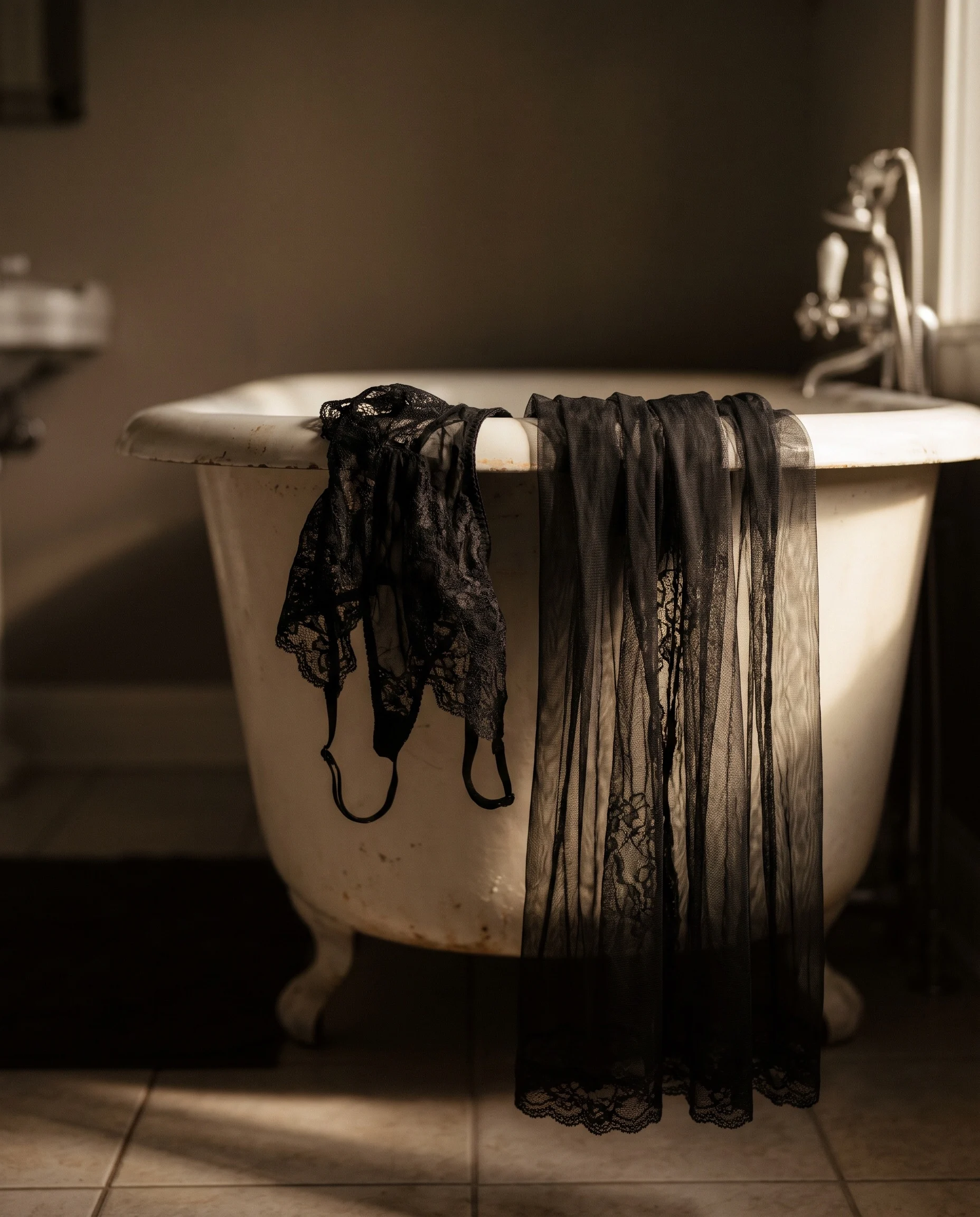
Shadows can conceal or reveal. Tell your photographer if there is an area you would rather keep in shadow.
Soft vs harsh light
- Soft light feels tender and smooths imperfections.
- Harsh light casts dramatic shadows and feels raw.
Choosing the location
A dimly lit room with vintage furniture works, and so does a simple, unadorned space. Soft music, few distractions and a warm setup help make it feel safe. Ask to pick the music if that helps you settle.
What to wear for moody boudoir photos
Choose outfits that match the tone you want, whether that is vulnerable, strong or sensual. With lingerie, match the style, fabric and color to the mood.
One simple piece of jewelry or a vintage prop can give an image a focal point. For more on that, browse these retro styling ideas for your shoot. Our plus size boudoir advice has more ideas for fuller figures.
Colors, fabrics and textures
- Warm, muted colors feel nostalgic and intimate.
- Cooler tones feel somber and introspective.
- Flowy, lightweight fabrics add movement and softness.
- Heavier, textured fabrics add weight and drama.
- Fur or aged wood adds a sensual, tactile layer.
How to pose in low light and stay comfortable
Moody boudoir poses work best when they feel natural to you. Expect gentle guidance into unguarded positions, not forced shapes. Posture, the tilt of your head and where your hands rest all carry emotion.
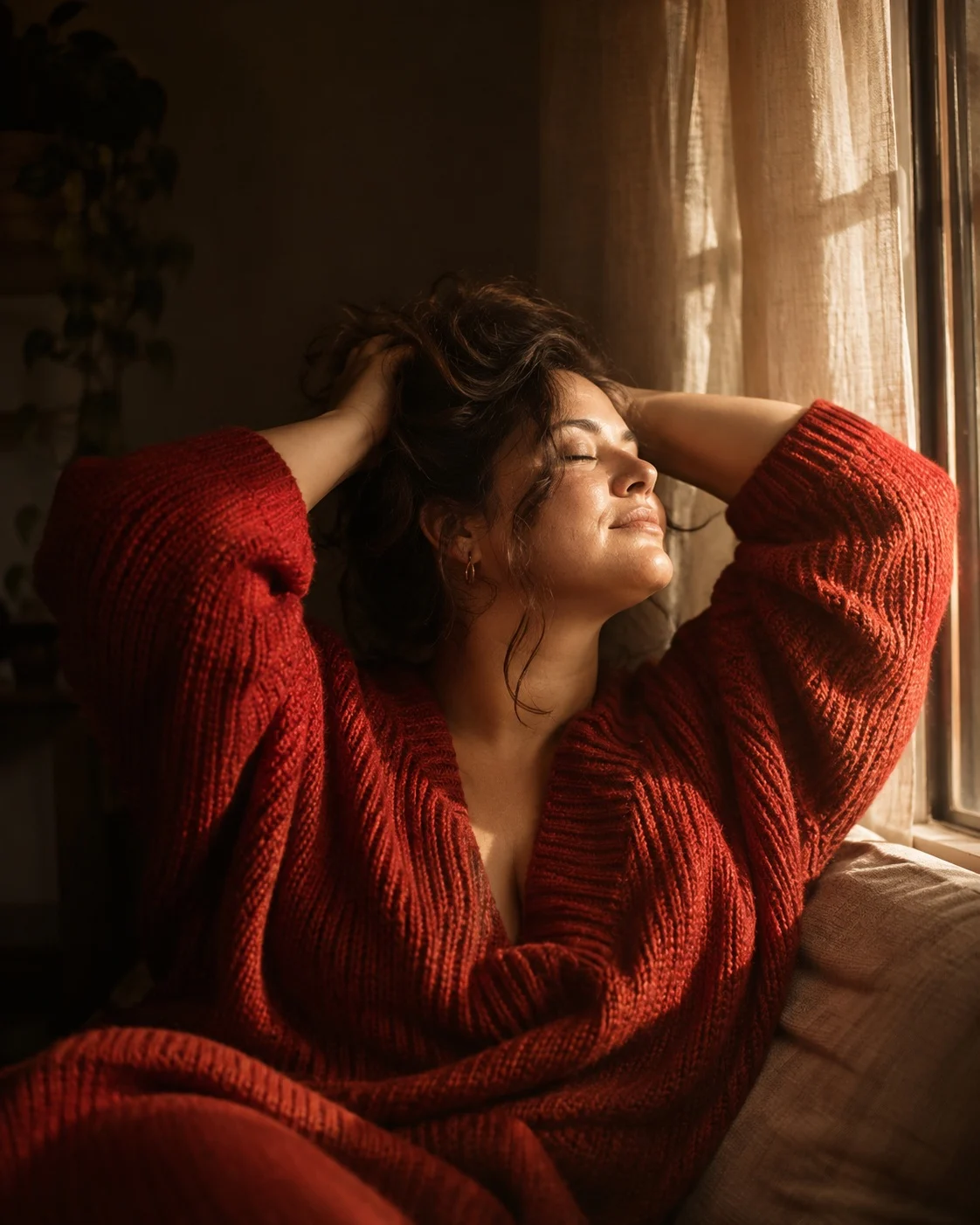
Feeling shy? Try a silhouette. You stand against a light source and the camera captures your outline, which keeps your features hidden and adds mystery.
Comfort comes from clear communication, rapport, steady encouragement and respect for your space, from everyone in the room.
Good to know
You can pause, change a pose or say no at any point. A good photographer will welcome that.
Camera settings and editing: what to ask a photographer
You do not need to learn boudoir camera settings, but the basics help you ask better questions. Low light boudoir photography usually relies on these choices:
- ISO kept as low as the light allows, to reduce noise
- A wide aperture, for more light and a soft effect
- A slower shutter speed, to capture movement
- Manual settings, for control over light and dark
Editing refines the moody look. Expect exposure, contrast and color changes, dodging and burning, color grading, and grain used sparingly for a film-like quality.
Checklist before you book
We recommend asking these questions before you book any moody photography session.
- How will you use natural light, curtains or reflectors?
- Can I see a cohesive set of your moody work?
- How will you handle low light and grain?
- Will you walk me through the process, from concept to final image?
- Who will be in the room, and how will my space be respected?
- How will you guide me into poses that feel natural?
Clear, patient answers are a good sign.
Moody boudoir photography tips: frequently asked questions
Do I have to show a lot of skin for moody boudoir photos?
No. Shadows can conceal as much as they reveal, and a silhouette shows only your outline, so you can choose how much to show. Tell your photographer what you are comfortable with before the session starts, and speak up if that changes. Outfits, poses and framing should all follow your limits.
Is moody boudoir a good choice if I am nervous?
Yes, it can be, because the style values genuine emotion over perfect poses. Feeling a little vulnerable is part of the look, not a problem to hide. Gentle guidance, soft music, few distractions and steady encouragement all help you settle. Ask your photographer how they will keep the room calm and respect your space.
Are dark and moody boudoir photos just a dark edit?
No. A dark moody image starts with light, shadow, setting and wardrobe, and editing refines what is already there. Exposure, contrast, color grading and a little grain can deepen the mood, but they do not create it alone. When you view a portfolio, look for a cohesive set of images and ask how each one was made.